
Latest news









Autoimmunity 2026: Key Innovations in Autoimmune Diagnostics, AI, and Standardization
The Autoimmunity 2026 Congress in Prague showcased groundbreaking advancements in autoimmune disease diagnosis, treatment, and research. These Autoimmunity 2026 Congress insights in autoimmune diagnostics highlight key developments in biomarkers, AI-driven diagnostics, and standardized testing methods. For Medipan & GA Generic Assays, the event emphasized innovations that are essential for developing next-generation diagnostic tools. We were pleased to have contributed to this success, showcasing our innovative solution at our booth.
In this post, our representatives at the congress explore the most impactful contributions, and emphasize their potential to transform autoimmune diagnostics and improve therapeutic monitoring.
🔬 Key Insights from Autoimmunity 2026 Congress
1. AI in Autoimmune Diagnostics: A Game-Changer
AI and machine learning are transforming autoimmune disease management by integrating immunogenetic, serologic, and other data into predictive algorithms.

Automated ANA Pattern Interpretation (Rico Hiemann):
- The AI-based system (akiron® NEO) was compared with classical visual interpretation in two clinical labs12. The results showed:
- Good to very good agreement (κ = 0.58–0.80) for ANA positive/negative classification (cutoff ≥1:80) and moderate to good agreement (κ = 0.54–0.80) for pattern recognition, following ICAP classification.
- In conclusion, AI-aided analysis can streamline diagnostic workflows and reduce subjectivity in ANA interpretation.
2. ICAP: Standardizing ANA Pattern Interpretation

The International Consensus on ANA Patterns (ICAP) was a recurring theme, emphasizing the need for standardized ANA testing to reduce false positives and improve diagnostic accuracy. ICAP promotes harmonized nomenclature and interpretation guidelines for HEp-2 IFA results. Luis Andrade reported on the recently introduced new patterns AC-30 (Nuclear fine speckled pattern with staining of the mitotic plate) and AC-31 (Characterized by myriad discrete, tiny dots distributed across the nucleus).
Novel Patterns Under Consideration (Jan Damoiseaux):
- AC-XX category: A miscellaneous group for HEp-2 IFA patterns not yet defined by ICAP. As these patterns become better defined in terms of antigen-specificity and clinical relevance, they may be considered for inclusion in the ICAP classification tree.
- Patterns currently under evaluation:
- SG2NA-like pattern
- Nuclear matrix pattern
- MDA5-like patterns
Standardized Terminology for SSA/Ro Autoantibodies (Maria Infantino):
- A new international expert consensus recommends updated and standardized terminology for the historically confusing SSA/Ro autoantibodies. These two autoantibodies target different antigens and are associated with distinct clinical features and diseases. However, they are often reported inconsistently in the literature. The new nomenclature aims to improve scientific clarity, diagnostic precision, and consistency across research and clinical practice3.
- Following a systematic review of scientific publications and a consensus process, the preferred terms are now:
- anti-TROVE2/Ro60 (formelly SSA/Ro60)
- anti-TRIM21/Ro52 (formelly SSA/Ro52)
Would you like to know our solutions to identify anti-TROVE2/Ro60 and anti-TRIM21/Ro52 antibodies? Take a look here!
Competent vs. Expert Classification in Practice (Maria Infantino):
- ICAP defines 32 HEp-2 IFA patterns organized into a classification tree with competent and expert levels.
- But classification typically depends more on image characteristics (e.g., low-titer samples with weaker fluorescence) rather than on analyst expertise. And global tendency to overuse expert-level categories, possibly due to cognitive bias.
- For this reason the ICAP is considering alternative terminology (e.g., basic vs. refined, broad vs. fine) to better reflect image complexity rather than expertise.
Curious to explore our solution with HEp-2 cells? Click here!
3. Disease-Specific Advances: APS, Vasculitis, and Beyond
The congress highlighted therapeutic innovations and the need for companion diagnostics to optimize treatment selection.
APS: Clinical and Laboratory Evolution (Angela Tincani):

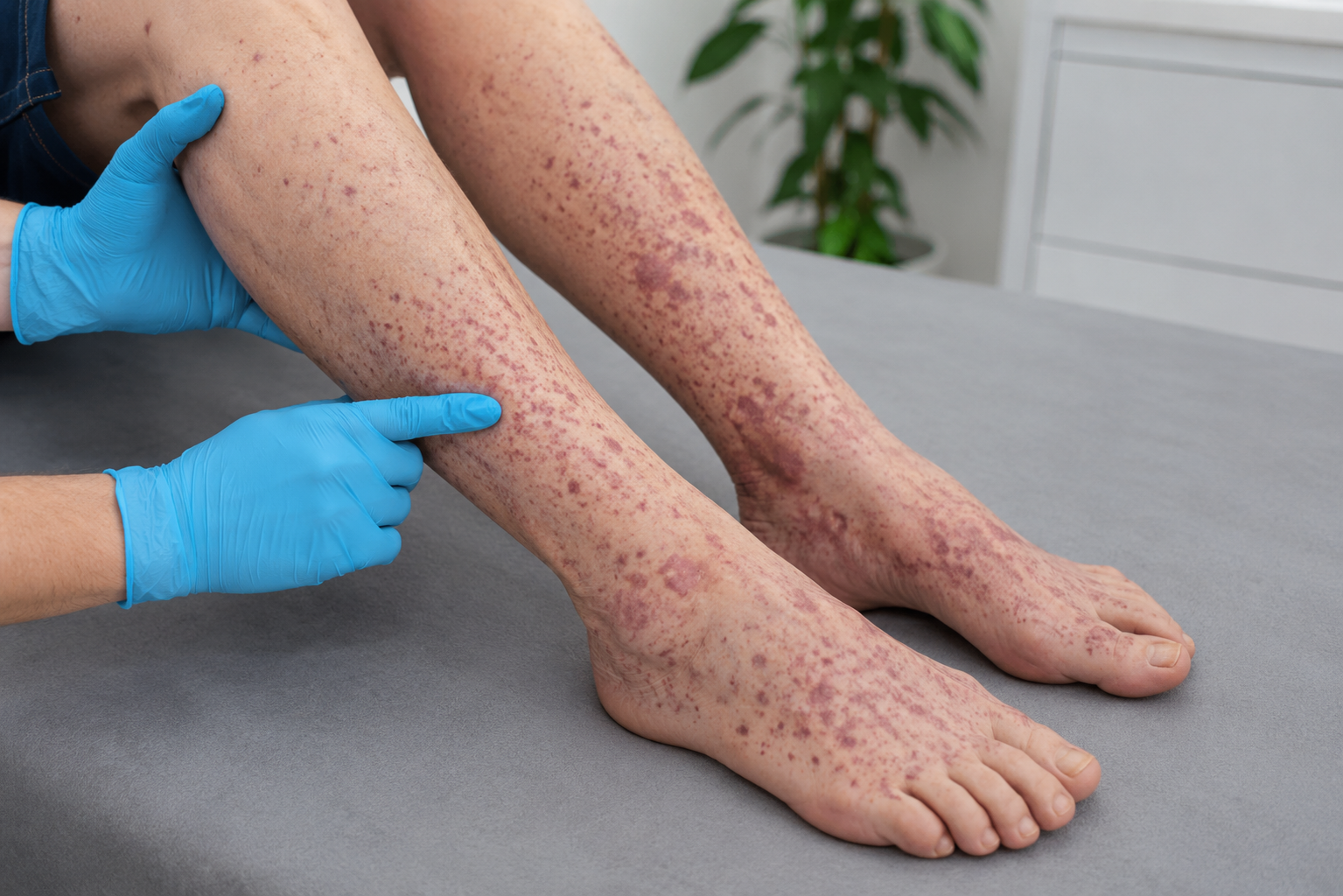
- The 2023 ACR/EULAR classification criteria4 for APS introduce new clinical and laboratory features, such as thrombocytopenia, cardiac valve disease, and microvascular manifestations (e.g., aPL nephropathy, livedo racemosa, pulmonary hemorrhage).
- The “high-risk” concept may be clinically confusing, as patients with multiple thrombotic risk factors require vigilant management regardless of classification weight.
- Laboratory challenges: The criteria mandate ELISA for aPL testing, but modern labs increasingly use automated platforms, leading to variability in results.
Impact of 2023 ACR/EULAR Criteria on APS (Jaume Alijotas Reig):
- The new criteria prioritize specificity (99%) over sensitivity (84%), potentially excluding patients with aPL-related manifestations from classification.
- Obstetric domain issues:
- The scoring system undervalues recurrent early and fetal losses, preventing sufficient point accumulation for APS classification.
- No consideration for healthy women with persistent aPL who experience severe pre-eclampsia, HELLP syndrome, or eclampsia beyond 34 weeks.
- Laboratory domain issues:
- IgM isotype of aPL is assigned a low score (1 point), despite its association with thrombotic and obstetric events in 15%-20% of patients.
- The criteria mandate ELISA for aPL testing, but variability in thresholds and methods leads to discordant results. Using the 99th percentile as a threshold is proposed to improve standardization.
- Obstetric domain issues:
Take a look at the wide range of tests we offer for APS diagnostics here!
Drug-Induced ANCA-Associated Vasculitis (Jan Willem Cohen Tervaert):
- Drugs (e.g., hydralazine, propylthiouracil, immune checkpoint inhibitors, cocaine) may increase neutrophil extracellular traps (NETs), triggering autoimmunity. This leads to highly variable clinical manifestations, ranging from isolated skin vasculitis to multi-organ involvement5.
- Diagnostic clues:
- Leukopenia/neutropenia and low complement levels (C3/C4) suggest drug-induced AAV.
- Atypical or perinuclear (p-ANCA) staining patterns, frequently accompanied by multiple ANCA antigens, are often recognized.
- Prognosis: Generally more favorable than idiopathic AAV, but physicians must be aware of the role of drugs in AAV development.
Do you already know solutions for ANCA-associated vasculitis? Discover it here.
4. Biomarkers: The Future of Precision Medicine
Autoimmune diseases are complex and heterogeneous, making early diagnosis and personalized treatment challenging. The congress underscored the role of novel biomarkers in improving diagnostic accuracy and predicting disease progression.
DFS70 Autoantigen and Inflammatory Gene Expression (Carlos Casiano):
- Autoantibodies against DFS70 (also known as LEDGF) occur in healthy individuals and in patients with moderate inflammatory conditions, suggesting a potential protective role.
- In cancer, DFS70 high expression contributes to therapy resistance by promoting DNA repair and maintaining genomic integrity.
- Silencing DFS70 in cancer cells led to upregulation of IL18, a cytokine associated with inflammatory cancer cell death, whereas high DFS70 expression was associated with worse patients’ survival.
- DFS70 may negatively regulate inflammatory genes, weakening cancer patients’ response to immunotherapy. This suggests a potential link between its inflammation-attenuating function and the protective nature of anti-DFS70 autoantibodies.
Detection of anti-DF70 antibodies is possible with our products here!
Predictive and Disease-Specific Biomarkers (Luis Andrade):
- Genetic markers (e.g., HLA-B27, HLA-DQ2/8) refine disease likelihood and prognosis.
- Cytokines (IL-6, IL-17, IL-23) and non-coding RNAs (miRNAs) are emerging as predictive biomarkers.
- Autoantibodies (e.g., anti-dsDNA, anti-CCP) can precede clinical symptoms by years, enabling early intervention.
- Interferon signature in SLE predicts response to JAK inhibitors.
- KL-6, CCL18, and NT-proBNP help predict organ involvement and disease progression.

💡 Looking Forward to Autoimmunity 2028 in Barcelona
As we conclude our reflections on the Autoimmunity 2026 Congress in Prague, we turn our gaze toward the future. The next chapter in this exciting journey will unfold in Barcelona in 20286, where we anticipate even greater advancements in autoimmune research, diagnostics, and therapeutic strategies.
The insights, collaborations, and innovations shared in Prague have set a strong foundation for the progress to come. We are eager to see how the discussions and discoveries from this year will shape the next generation of autoimmune diagnostics and treatments.
References
- Mayr et al., (2025) Pilot Study of AI-Assisted ANA Immunofluorescence Reading—Comparison with Classical Visual Interpretation ↩︎
- Schmidt et al., (2025) Comparison of manual with AI-aided interpretation of ANA HEp-2 IIF assay patterns in a clinical diagnostics lab ↩︎
- Nikolic et al., (2026) International expert consensus recommendations on standardised nomenclature of SSA/Ro (TROVE2/Ro60 and TRIM21/Ro52) autoantibodies in autoimmune diseases Author links open overlay panel ↩︎
- Barbhaiya, et al. (2024) The 2023 ACR/EULAR Antiphospholipid Syndrome Classification Criteria ↩︎
- Tervaert, et al. (2025) Drug- and vaccine induced ANCA-associated vasculitis: An overview ↩︎
- 16th International Congress on Autoimmunity, 27-30 April, Barcelona, Spain ↩︎