

5070 – DotDiver HepAK 10
Highlights
- Use of highly purified and recombinant liver-specific antigens (M2/nPDC, M2/OGDC-E2, M2/BCOADC-E2, M2/PDC-E2, gp210, sp100, LKM1, LC1, SLA, F-actin)
- Qualitative dot immunoassay for the detection of IgG antibodies in human serum
- Supports the diagnosis of autoimmune liver diseases, including AIH, PBC, and PSC
- Semi-automated processing with the DotDiver instrument
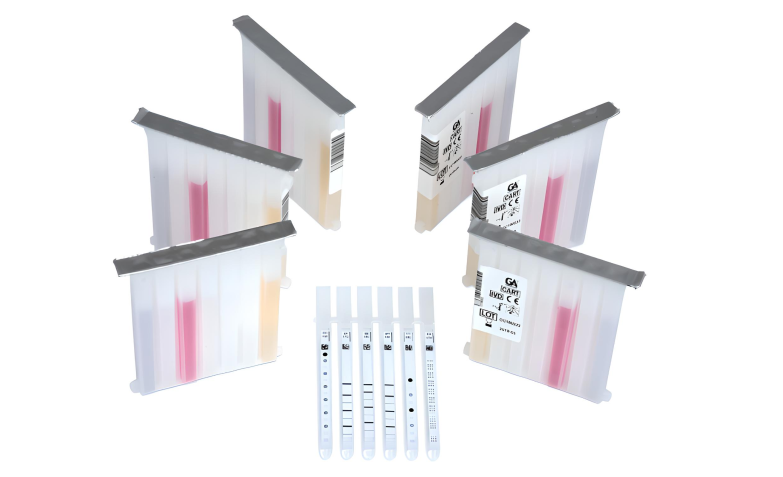
- Ready-to-use breakable test strips with integrated positive and negative controls
- High-purity antigens for sensitive and specific antibody detection
- Enzyme-based color development for clear visual interpretation
- Enables multi-antigen testing on a single strip
- Designed for professional in vitro use
Intended Purpose
The DotDiver HepAK 10 is a qualitative dot immunoassay for the determination of IgG antibodies against liver specific antigens (M2/nPDC, M2/OGDC-E2, M2/BCOADC-E2, M2/PDC-E2, gp210, sp100, LKM1, LC1, SLA and F-actin) in human serum. Clinicians use the DotDiver HepAK 10 to support the diagnosis of autoimmune liver diseases in combination with other clinical and laboratory findings. The immunoassay is designed for semi-automated use with the DotDiver instrument. The immunoassay is designed for professional in vitro diagnostic use.
Diagnostic Relevance
Primary autoimmune liver diseases (PAL) include chronic disorders such as autoimmune hepatitis (AIH), primary biliary cirrhosis (PBC), and primary sclerosing cholangitis (PSC). These diseases share an autoimmune pathogenesis in which the immune system generates antibodies against liver-specific antigens. Detecting these autoantibodies helps distinguish PAL from other chronic liver diseases, particularly after excluding viral or infectious causes.
Autoantibody Patterns in PAL
Patients with PSC often present intestinal symptoms, and serological testing may reveal atypical ANCA patterns using indirect immunofluorescence on neutrophils. PBC patients typically show antibodies against mitochondrial antigens (M2), including components of the pyruvate-dehydrogenase complex. Additional disease-specific antinuclear antibodies, such as those against the nuclear pore protein gp210 or the nuclear body protein sp100, frequently appear in PBC and may indicate disease progression or prognosis.
AIH patients display a variety of autoantibodies. AIH patients display different autoantibody profiles depending on the subtype. In Type I AIH, clinicians detect antinuclear antibodies (ANA) and smooth muscle antibodies (ASMA) that recognize polymeric F-actin. Type II AIH shows a high prevalence of antibodies against liver and kidney microsomal antigens (LKM1) and cytosolic antigens such as formiminotransferase/cyclodeaminase (LC1). In contrast, Type III AIH, defined by antibodies against the soluble liver antigen (SLA), is less widely recognized but adds diagnostic specificity.
By detecting multiple liver-specific autoantibodies simultaneously, the DotDiver HepAK 10 enables early and precise identification of autoimmune liver diseases. This comprehensive approach supports clinicians in accurate diagnosis, informed decision-making, and tailored patient management.
Product Specifications
| Title | DotDiver HepAK 10 |
| Product code | 5070 |
| Indication | Autoimmune liver diseases |
| Description | Dot immunoassay for the qualitative determination of IgG antibodies against liver specific antigens in human serum |
| Format | Test strips coated with highly purified M2/nPDC, M2/OGDC-E2, M2/BCOADC-E2, M2/PDC-E2, gp210, sp100, LKM1, LC1, SLA and F-actin |
| Total incubation time | 64 min. |
| Sample volume | 10 µL serum |
| No. of determinations | 24 x 10 |
Free downloads
SDS [REF 5070][eng] SDS [REF 5070][deu]Restricted downloads - Password required
Current version of the instructions for use. The respective valid version for processing the test can be found in the product packaging.