
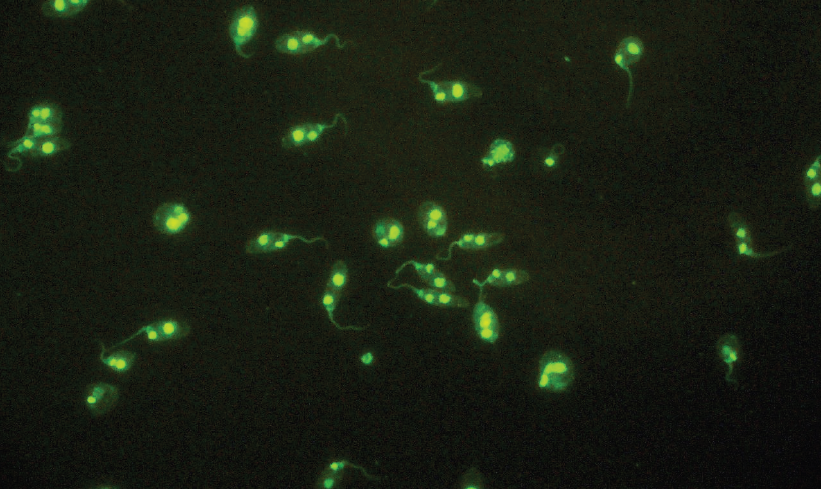
4282, 4283 – AKLIDES® nDNA
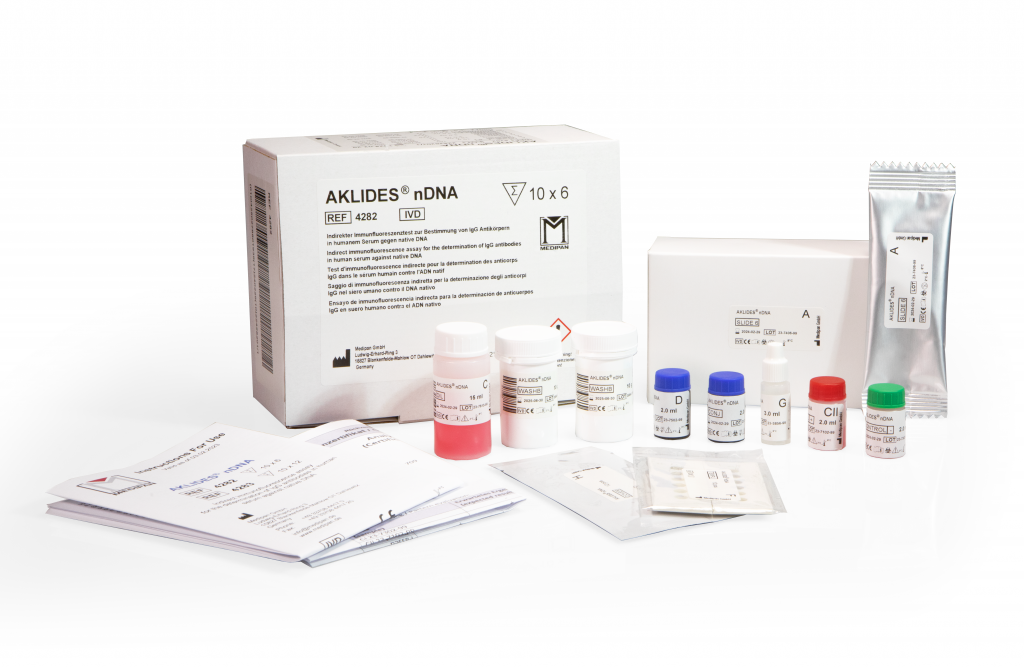
Highlights
- Slides coated with Crithidia luciliae
- Specific detection of IgG antibodies against double-stranded DNA (dsDNA)
- Support for the diagnosis of systemic lupus erytematosus (SLE)
- Qualitative and semi-quantitative determination of the IgG antibodies
- Ready-to-use reagents (exception: wash buffer)
- Quality assured handling in routine laboratories
- Short incubation times (30 min / 30 min) at room temperature
- Consistent processing for the parallel use of multiple AKLIDES® IF assays
- Excellent diagnostic sensitivity and specificity
- Imaging by use of akiron® or AKLIDES® systems
- CE marked
Intended Purpose
The AKLIDES® nDNA immunofluorescence assay (IFA) qualitatively detects IgG antibodies in human serum against native double-stranded DNA on Crithidia luciliae hemoflagellates. It aids in diagnosing systemic lupus erythematosus (SLE) alongside other clinical and laboratory findings. The assay supports manual processing and automated imaging with akiron® or AKLIDES® systems and is intended for professional in vitro diagnostic use only.
Diagnostic Relevance
Systemic lupus erythematosus (SLE) is an autoimmune disease that manifests with the formation of antinuclear antibodies (ANA), particularly antibodies against double-stranded deoxyribonucleic acid (dsDNA). The disease is rare. Women develop systemic lupus erythematosus more often than men. The disease produces different symptoms depending on the affected organs or organ systems, and these symptoms can change over time.Butterfly erythema occurs in a large number of patients and spreads symmetrically from the bridge of the nose to the cheeks. Furthermore, general symptoms such as fatigue, fever and weight loss are often described.
Diagnosis and Laboratory Testing
The diagnosis is made on the basis of the clinical symptoms and laboratory medical examinations. The clinical suspicion is based in particular on the detection of anti-nuclear antibodies (ANA). Antibodies against double-stranded deoxyribonucleic acid (dsDNA) are pathognomonic for systemic lupus erythematosus (SLE). They occur in about 65 % of patients and, along with antibodies against Smith antigen (Sm) and against phospholipids, are part of the classification criteria of American and European rheumatologists (ACR: American College of Rheumatology, EULAR: European League Against Rheumatism).
Role of Crithidia luciliae in Testing
Crithidia luciliae is a eukaryotic, protozoan parasite of the Trypanosomatidae family. This microorganism features a so-called kinetoplast in a large mitochondrion, which mainly consists of circular, double-stranded deoxyribonucleic acid (DNA). The kinetoplast contains a high concentration of DNA and lacks other human nuclear antigens, making Crithidia luciliae highly effective for specifically detecting antibodies against dsDNA in the immunofluorescence assay (IFA).
Publications
Product Specifications
| Title | AKLIDES® nDNA |
| Product code | 4282 or 4283 |
| Indication | Systemic lupus erythematosus |
| Description | Immunofluorescence assay (IFA) for the determination of IgG antibodies against dsDNA in human serum |
| Format | Slides coated with Crithidia luciliae |
| Incubation time | 60 min. |
| Sample volume | 10 µL serum |
| No. of determinations | 60 (10 x 6) or 120 (10 x 12) |
Free downloads
SDS [REF 4282, 4283][eng] SDS [REF 4282, 4283][deu] Flyer [REF 4282, 4283][AKLIDES® nDNA][eng] Flyer [REF 4282, 4283][AKLIDES® nDNA][deu] Flyer [IFA Product Portfolio][eng]Restricted downloads - Password required
Current version of the instructions for use. The respective valid version for processing the test can be found in the product packaging.