
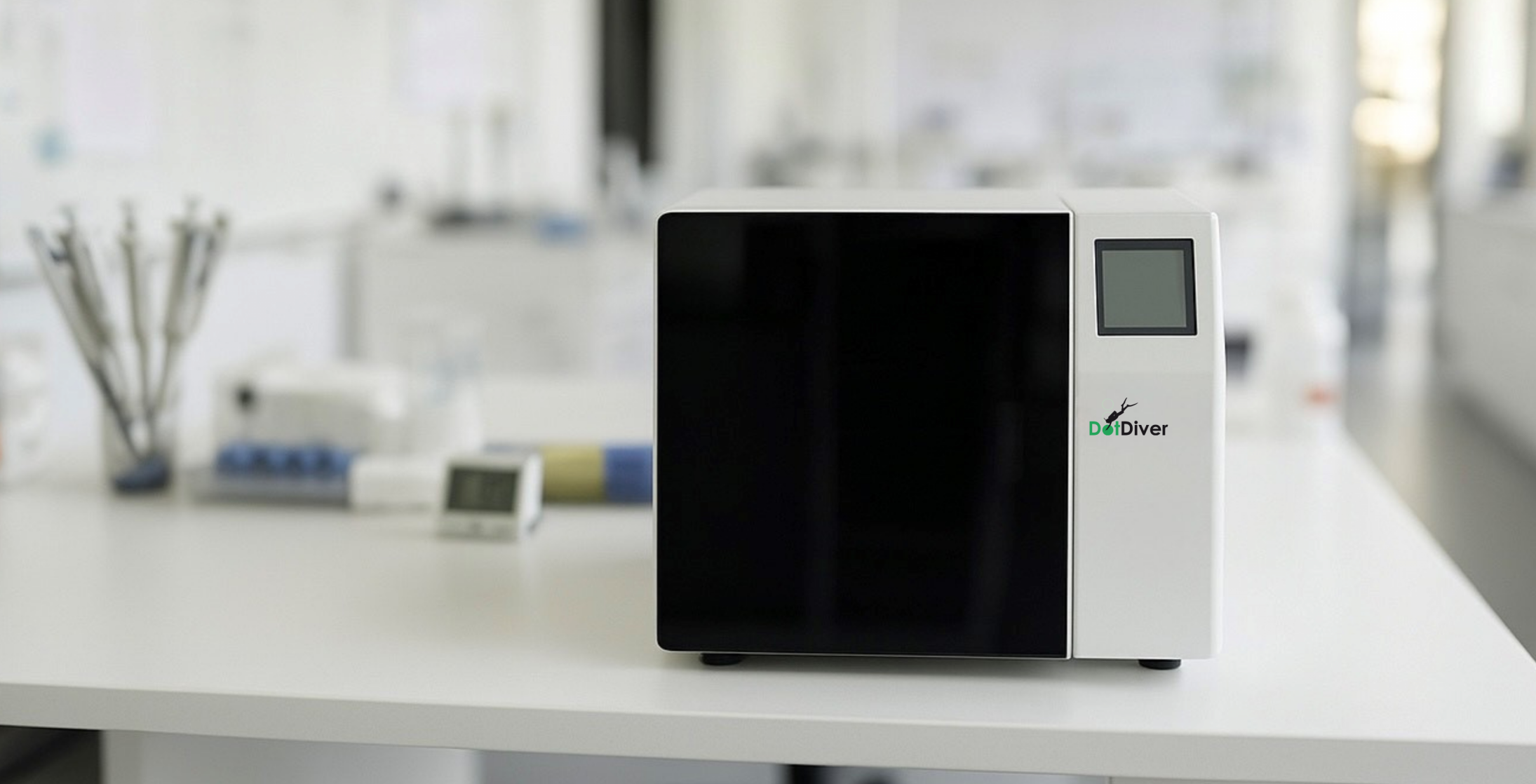
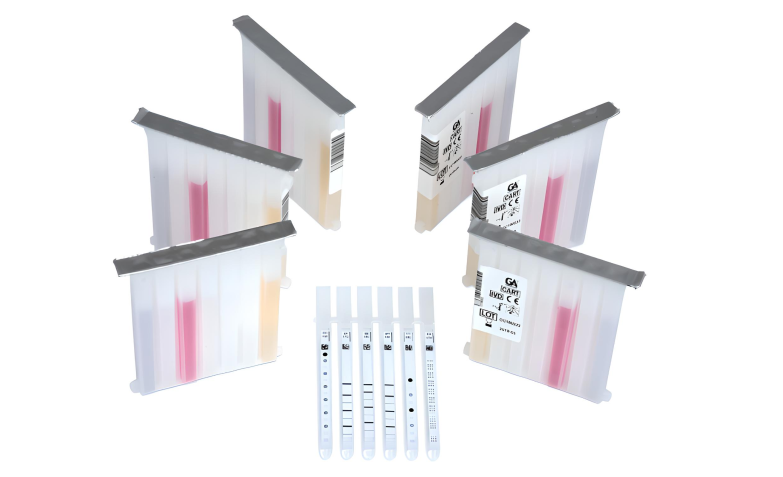
5019 – DotDiver BiermAK
Highlights
- Use of highly purified intrinsic factor and H⁺/K⁺ ATPase as solid-phase antigens
- Supports the diagnosis of chronic atrophic gastritis and pernicious anemia in combination with clinical and laboratory findings
- Provides high diagnostic relevance for type A gastritis and associated autoimmune endocrinopathies
- Ready-to-use test strips and cartridges for convenient processing with the DotDiver instrument
- Reliable and reproducible results for routine laboratory testing
- Suitable for monitoring vitamin B12 deficiency and autoimmune gastritis progression
- Ready-to-use reagents (except wash buffer) for convenience
- Suitable for routine laboratory testing
- CE marked
Intended Purpose
The DotDiver BiermAK is a qualitative dot immunoassay for detecting IgG antibodies against intrinsic factor and parietal cell antigens in human serum. It is intended as an aid in diagnosing chronic atrophic gastritis in combination with clinical and laboratory findings. The immunoassay is designed for semi-automated use with the DotDiver instrument. The immunoassay is designed for professional in vitro diagnostic use.
Diagnostic Relevance
Chronic atrophic gastritis of type A is an autoimmune condition characterized by the destruction of parietal cells and the production of autoantibodies against both the parietal cells and intrinsic factor. This condition accounts for approximately 5% of all gastritis cases and often occurs in the context of other autoimmune disorders, such as Hashimoto’s thyroiditis, Addison’s disease, or insulin-dependent diabetes mellitus. Patients with type A gastritis face an increased risk of gastric carcinoma, emphasizing the clinical importance of early detection.
Intrinsic factor (IF) is a glycoprotein crucial for vitamin B12 absorption in the digestive tract. Parietal cells secrete intrinsic factor, which binds ingested vitamin B12 and forms a complex that the ileum absorbs via a specific intrinsic factor receptor. Deficiency in IF or impaired complex formation results in vitamin B12 malabsorption and can lead to the development of Biermer’s anemia (pernicious anemia).
The H⁺/K⁺ ATPase in parietal cells is the main antigen for autoantibodies targeting parietal cells. Antibodies against this ATPase serve as a sensitive marker for type A gastritis and occur in 80–90% of affected patients. Autoantibodies against intrinsic factor interfere with vitamin B12 binding or absorption and represent pathognomonic markers of pernicious anemia. They are classified into two types: Type 1 antibodies block the binding site for vitamin B12 on IF, while Type 2 antibodies prevent the vitamin B12–IF complex from binding to its ileal receptor.
Early detection of these autoantibodies aids clinicians in diagnosing chronic atrophic gastritis, assessing the risk of vitamin B12 deficiency, and guiding appropriate therapeutic interventions. The automated DotDiver system ensures consistent and reproducible results, supporting routine laboratory testing and facilitating the monitoring of disease progression.
Product Specifications
| Title | DotDiver BiermAK |
| Product code | 5019 |
| Indication | Pernicious Anemia |
| Description | Dot immunoassay for the qualitative determination of IgG antibodies against intrinsic factor and antigens of parietal cells in human serum |
| Format | Test strips coated with highly purified intrinsic factor and H+/K+ ATPase |
| Total incubation time | 64 min. |
| Sample volume | 10 µL serum |
| No. of determinations | 24 x 2 |
Free downloads
SDS [REF 5019][eng] SDS [REF 5019][deu]Restricted downloads - Password required
Current version of the instructions for use. The respective valid version for processing the test can be found in the product packaging.